ES:
Llegamos a Caluquí para documentar un momento importante para la comunidad: la inauguración de un nuevo tanque de reserva de agua destinado a fortalecer la producción agrícola local. Poco a poco, las familias comenzaron a reunirse en el espacio donde se desarrollaría el acto. Mientras las autoridades comunitarias organizaban los últimos detalles y los asistentes intercambiaban saludos y conversaciones, la espera transcurría sin prisa.
Fue entonces cuando una escena llamó nuestra atención.
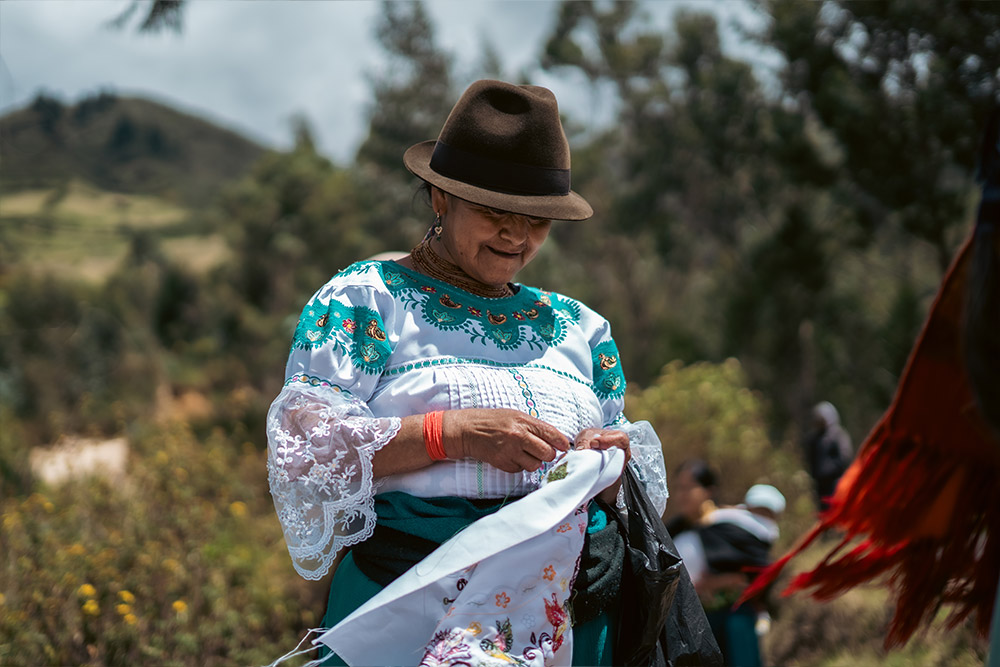
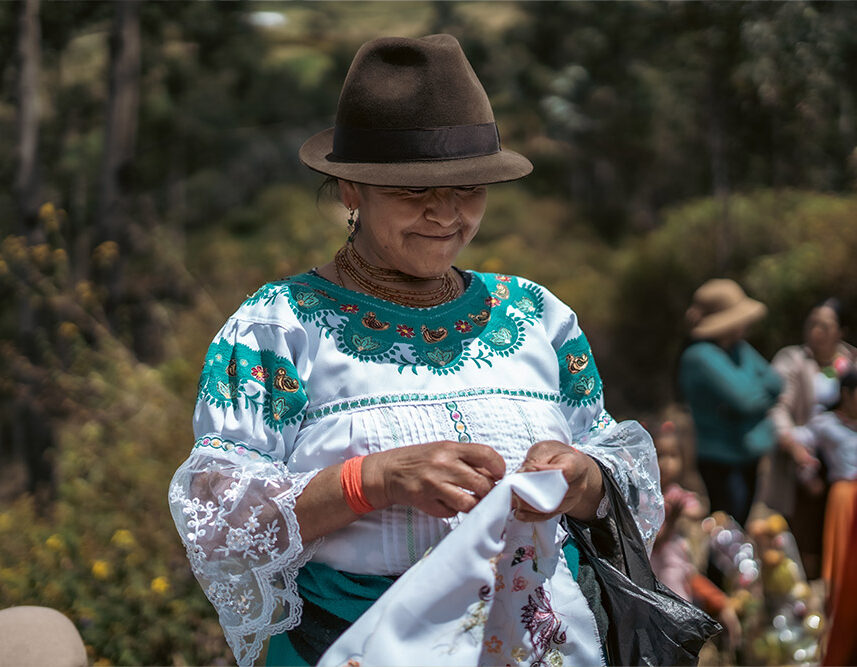
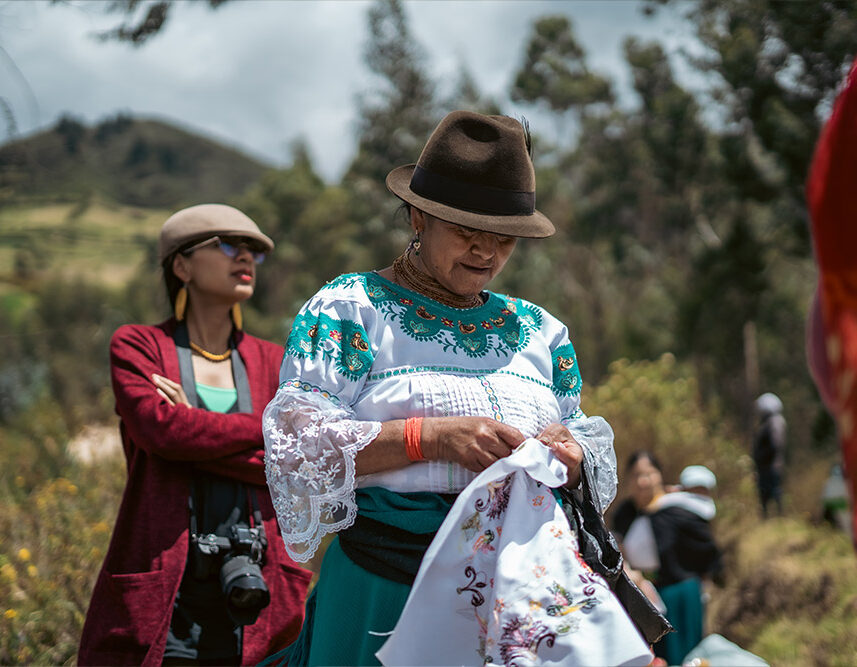
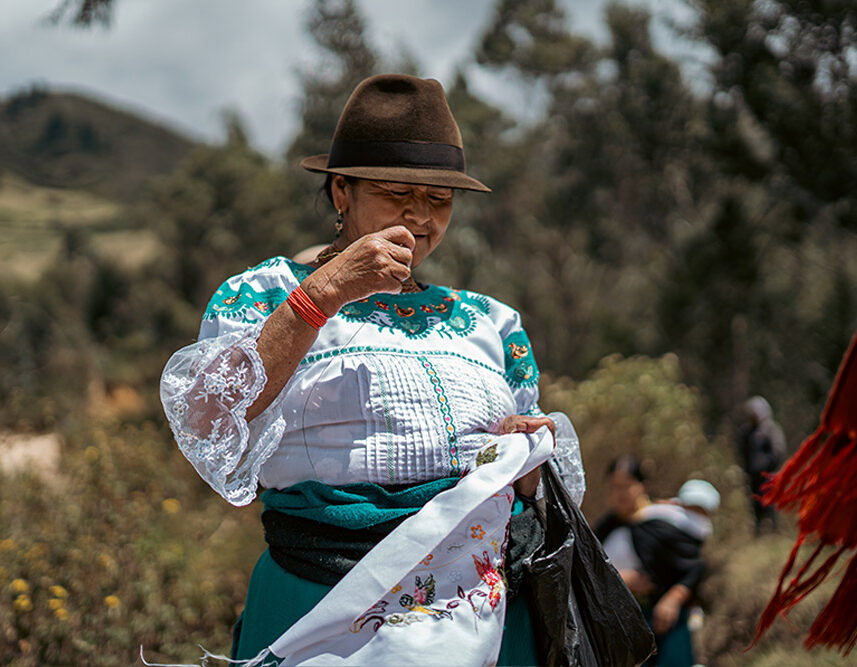
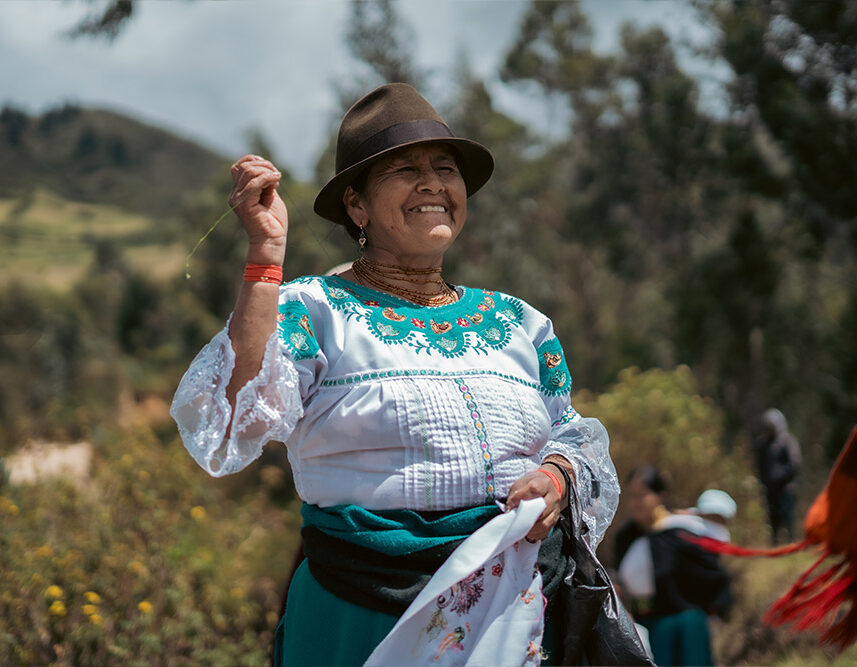
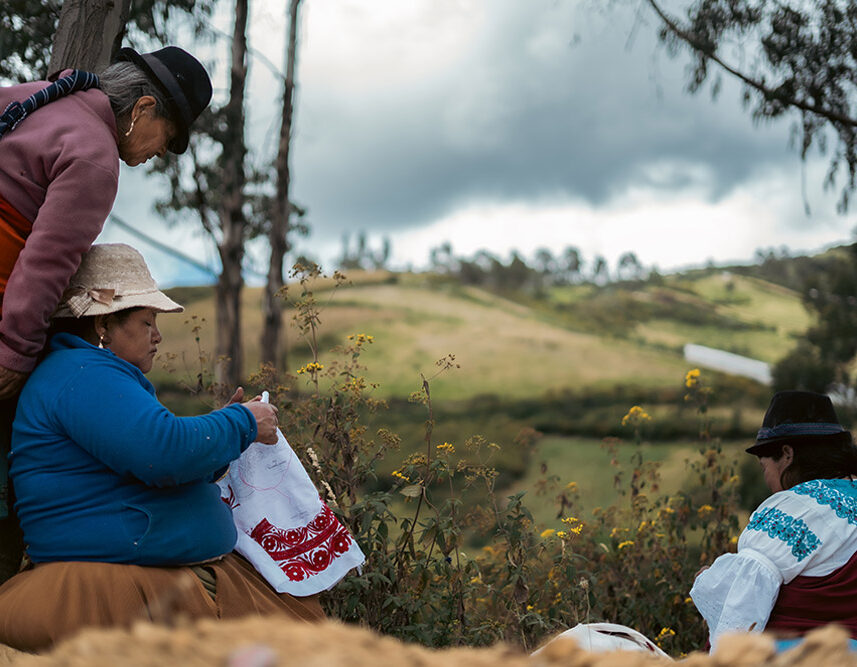
Una mujer permanecía de pie entre la gente, bordando una camisa con la misma naturalidad con la que conversaba y sonreía con quienes se acercaban a ella. Sus manos avanzaban puntada tras puntada mientras la vida comunitaria continuaba a su alrededor. En otra esquina, una segunda mujer bordaba sentada, observada por otras compañeras que seguían con atención el trabajo que nacía entre hilos y tela.
Durante varios minutos, el bordado dejó de ser únicamente una labor artesanal para convertirse en una forma de habitar el tiempo. No existía una separación entre trabajo, conversación y encuentro; todo ocurría simultáneamente. Las risas, las palabras compartidas y las puntadas formaban parte de una misma escena.
En comunidades como Caluquí, donde el agua representa mucho más que un recurso y está profundamente ligada a la agricultura, la alimentación y la continuidad de la vida comunitaria, los momentos colectivos suelen estar acompañados por prácticas cotidianas que hablan de identidad, memoria y conocimiento transmitido entre generaciones.
EN:
We arrived in Caluquí to document an important moment for the community: the inauguration of a new water storage reservoir designed to strengthen local agricultural production. Little by little, families gathered at the site where the event would take place. While community leaders finalized preparations and neighbors exchanged greetings and conversations, the waiting unfolded at its own pace.
That was when a particular scene caught our attention.
Standing among the crowd, one woman quietly embroidered a shirt while talking and laughing with the people around her. Her hands continued moving stitch by stitch as community life carried on around her. Nearby, another woman sat embroidering while several others watched closely, following the work taking shape through thread and fabric.
For a moment, embroidery seemed to become more than a craft. It became a way of inhabiting time. There was no separation between work, conversation, and gathering; all of it happened simultaneously. Laughter, shared stories, and careful stitches formed part of the same scene.
In communities such as Caluquí, where water represents far more than a resource and remains deeply connected to agriculture, food sovereignty, and collective well-being, community gatherings are often accompanied by everyday practices that carry memory, identity, and knowledge passed down through generations.