
ES:
Durante el Inti Raymi fuimos invitados a San Pablo del Lago para observar la intervención de los Campanilleros de Angla. En el parque central, mientras la celebración reunía poco a poco a la gente, apareció una expresión cultural que lleva consigo mucho más que música y movimiento.
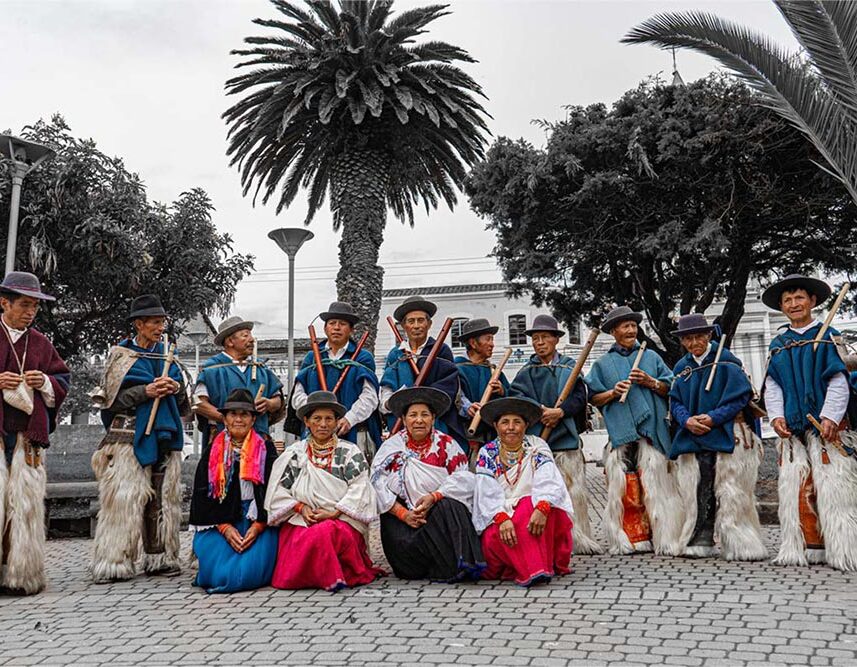
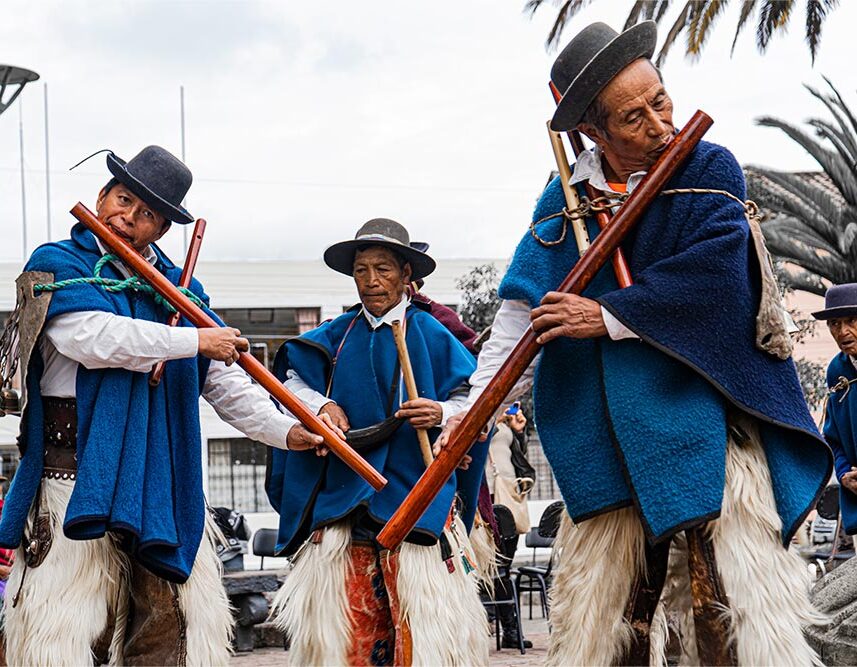
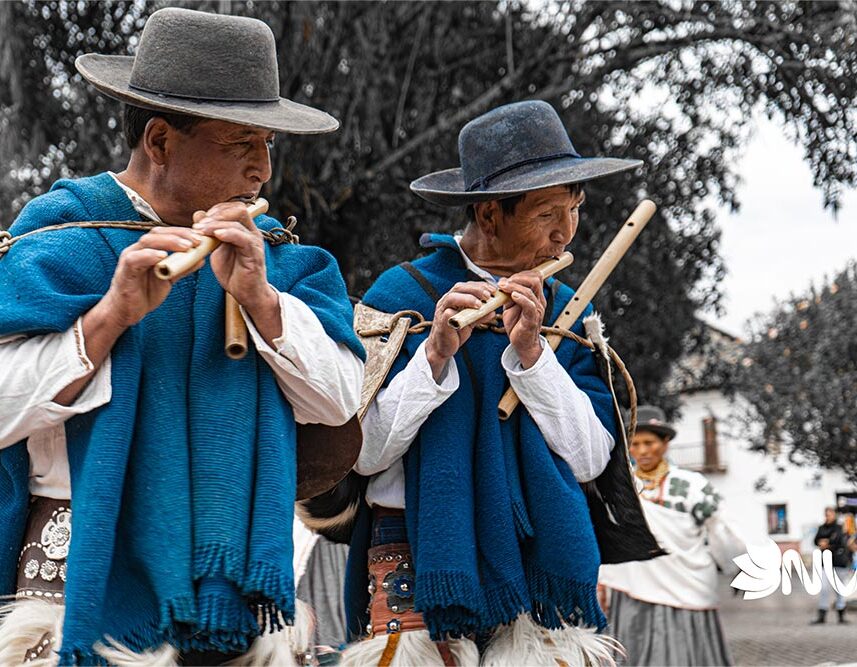
Los Campanilleros pertenecen a la tradición del pueblo Kichwa Kayambi de la comunidad de Angla. Su presencia se reconoce por las campanas que llevan sobre sus espaldas, acompañadas por flautas y tundas. La práctica ha sido transmitida entre generaciones y forma parte de las expresiones vinculadas al Inti Raymi y a las celebraciones de las comunidades de la zona.
Durante la jornada tuvimos la oportunidad de conversar con dos de sus integrantes y conocer parte de sus historias. Más que registrar una presentación, nos interesaba acercarnos a quienes mantienen viva esta práctica y comprender qué significa para ellos continuar haciéndola.
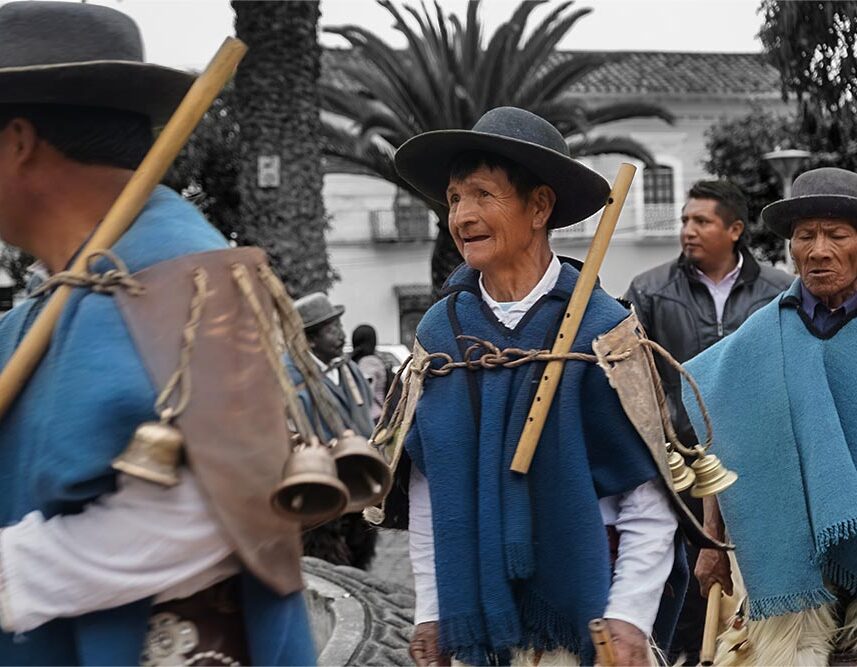
Las campanas tienen una presencia física evidente. Se cargan sobre la espalda y acompañan el movimiento del cuerpo con cada paso. Pero su peso no está únicamente en el metal. También está en aquello que representan: los recuerdos de quienes enseñaron a los más jóvenes, las formas de aprender observando a los mayores y la decisión de continuar reuniéndose para que una práctica heredada no quede solamente en el pasado.
En los últimos años, distintos procesos comunitarios y proyectos de investigación han puesto atención en la necesidad de fortalecer la transmisión de estos saberes. El propio Instituto Nacional de Patrimonio Cultural ha documentado iniciativas orientadas a preservar los conocimientos musicales y la fabricación tradicional de las flautas entre los campanilleros de Angla.
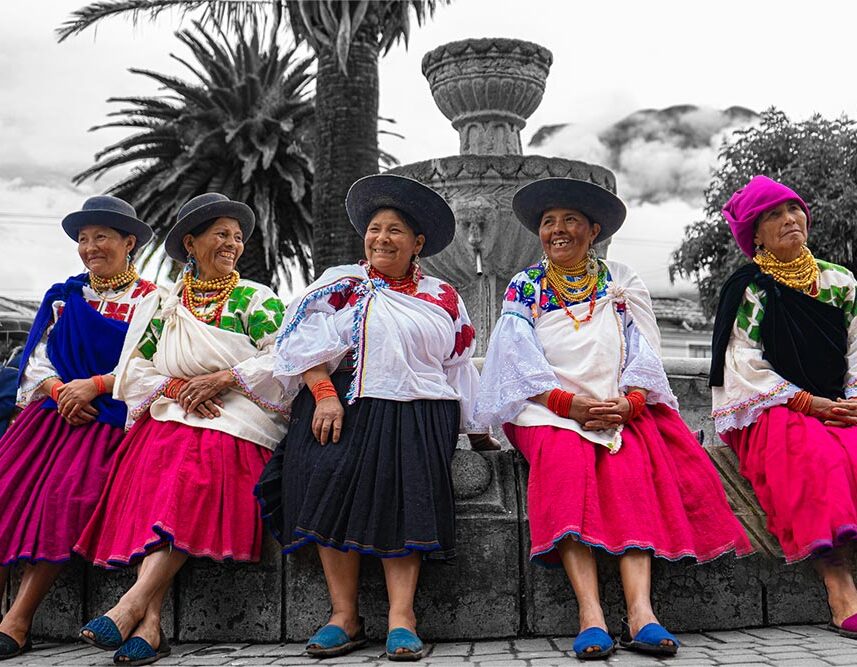
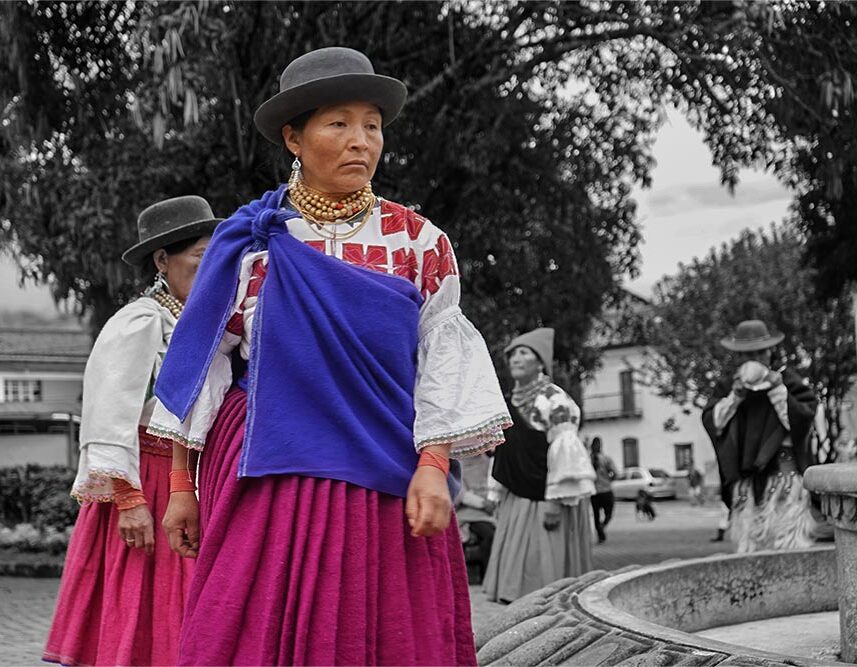
Estas fotografías fueron realizadas durante una de esas jornadas de encuentro. Son fragmentos de una tradición que todavía camina, toca, danza y ocupa el espacio público.
EN:
During Inti Raymi, we were invited to San Pablo del Lago to witness a performance by the Campanilleros of Angla. In the town’s central park, as people gradually gathered for the celebration, a cultural expression emerged carrying far more than music and movement.
The Campanilleros belong to the Kichwa Kayambi tradition of the community of Angla. They are recognized by the bells carried on their backs, accompanied by flutes and tundas. The practice has been passed down through generations and remains closely connected to Inti Raymi and other celebrations among communities in the region.
During the event, we had the opportunity to speak with two of its members and learn part of their personal stories. Rather than simply documenting a performance, we wanted to get closer to the people who keep this practice alive and understand what it means to them to continue carrying it forward.
The bells have an unmistakable physical presence. They are carried on the back, becoming part of the movement of the body with every step. But their weight is not only in the metal. It is also in what they represent: the memories of those who taught younger generations, the knowledge learned by observing elders, and the decision to continue gathering so that an inherited practice does not become something belonging only to the past.
In recent years, community initiatives and research projects have drawn attention to the importance of strengthening the transmission of this knowledge. Ecuador’s National Institute of Cultural Heritage has documented initiatives aimed at preserving the musical knowledge and traditional flute-making practices among the Campanilleros of Angla.
These photographs were made during one of those gatherings. They are fragments of a tradition that continues to walk, play, dance, and occupy public space.