ES:
Llegamos a Caluquí para continuar el registro de la vida cotidiana de la comunidad como parte del documental que venimos realizando alrededor del agua. Ese día no teníamos previsto encontrar una escena que terminaría revelando varias dimensiones de la vida comunitaria al mismo tiempo.
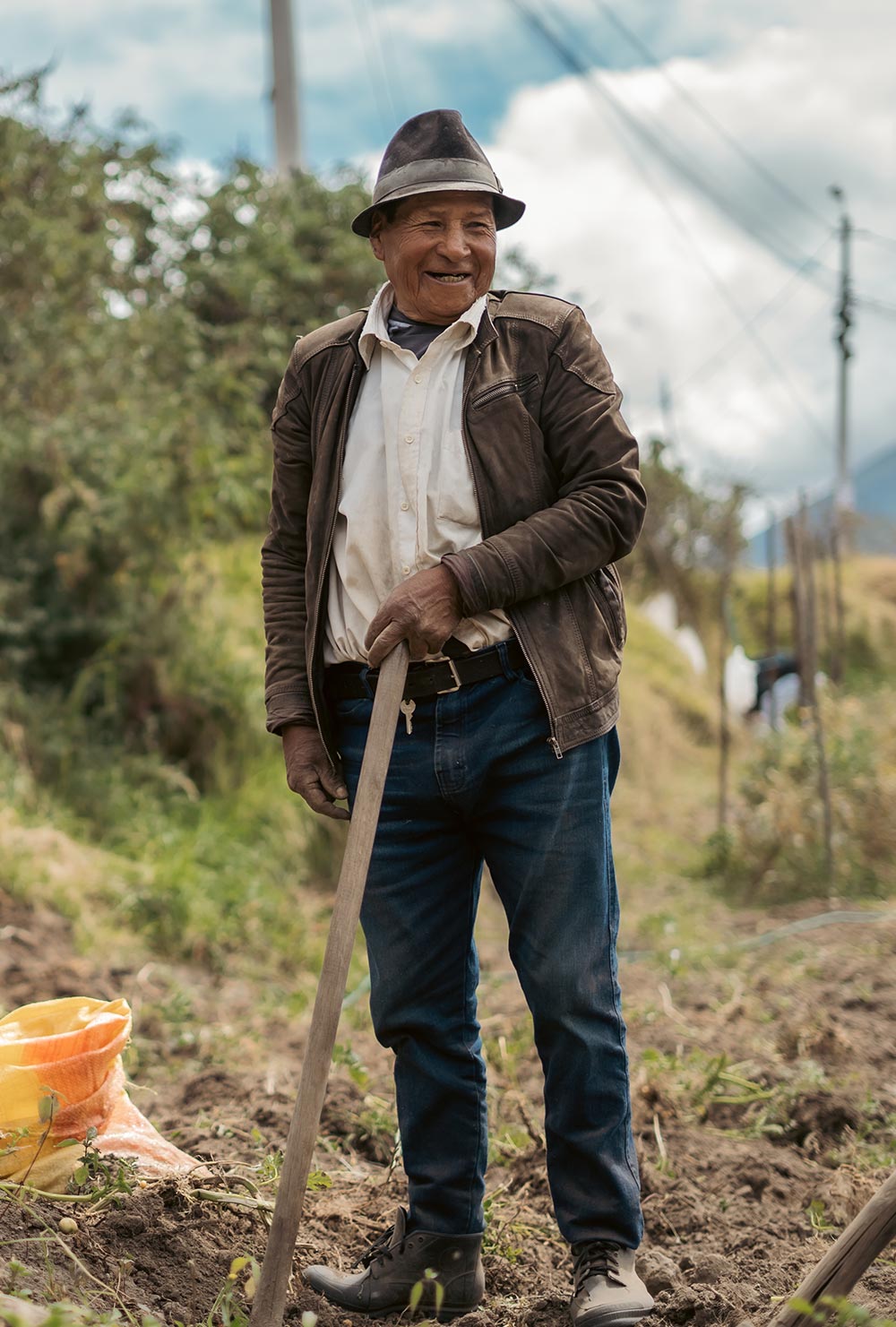
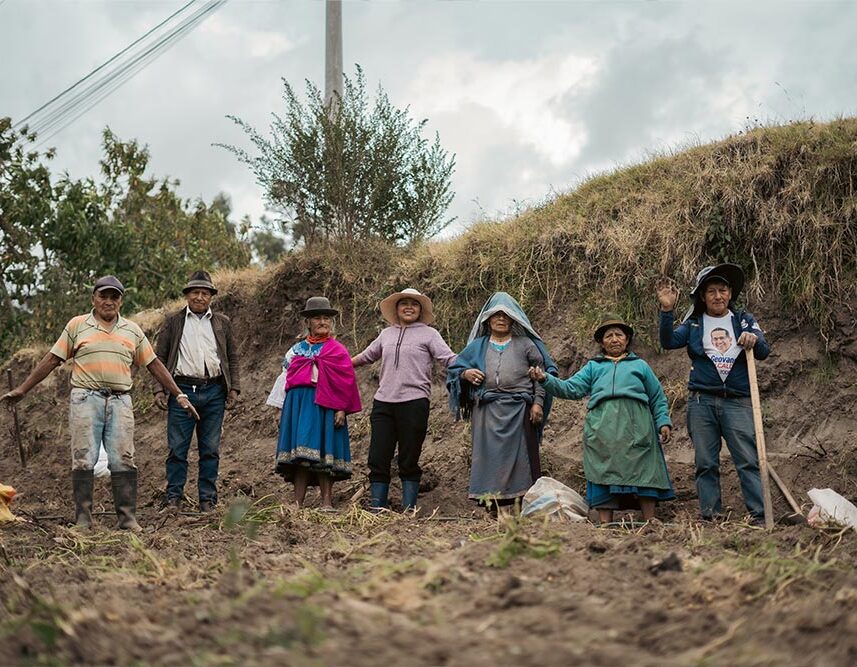
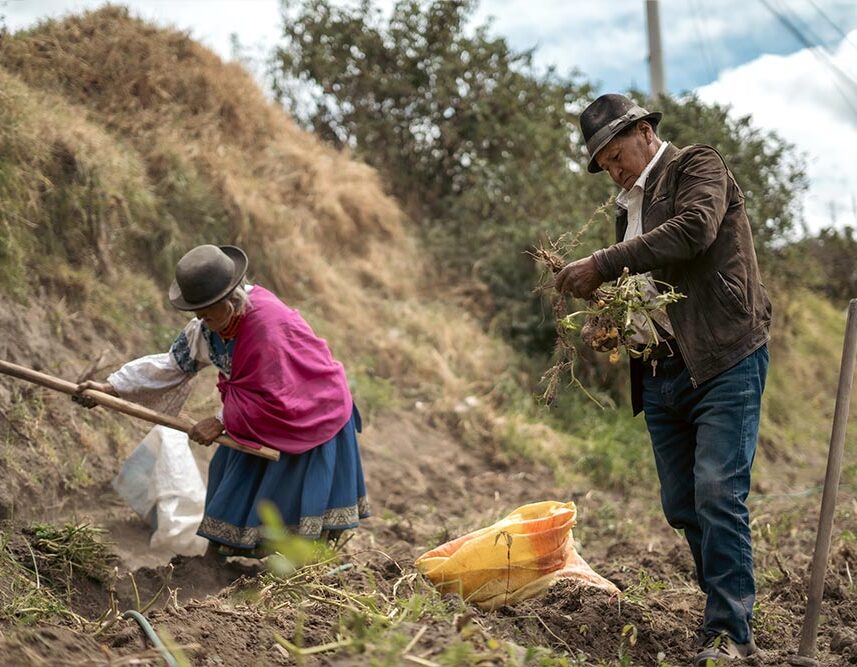
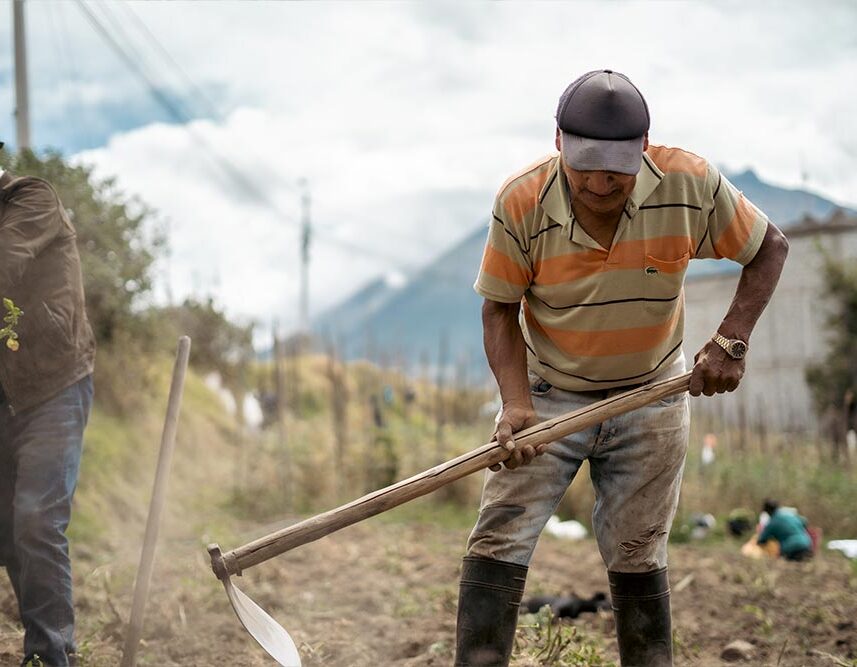
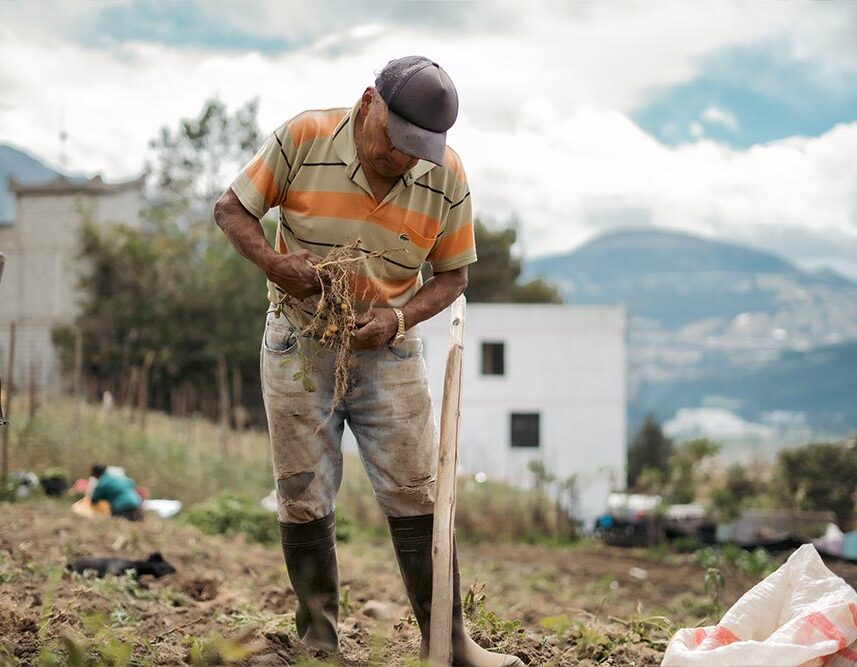
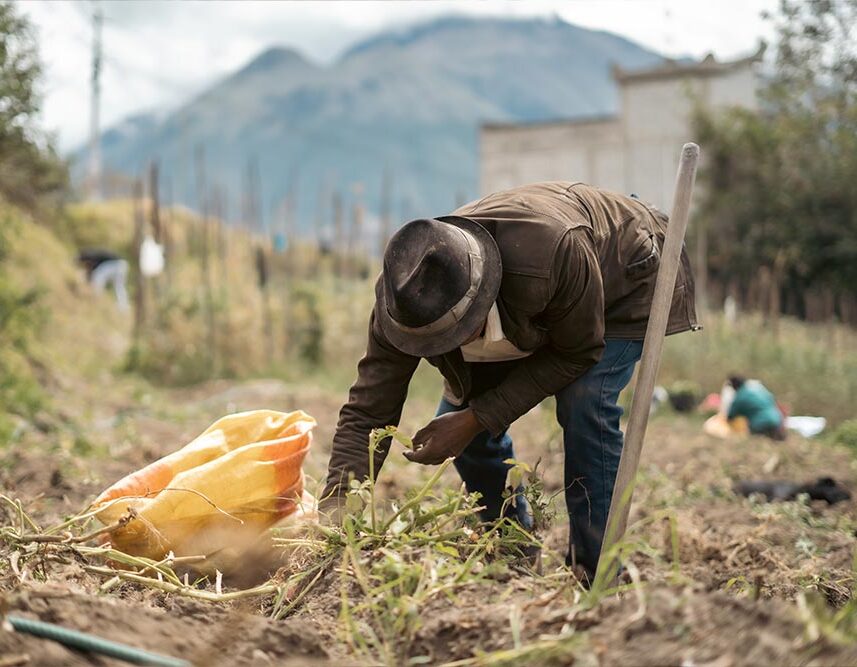
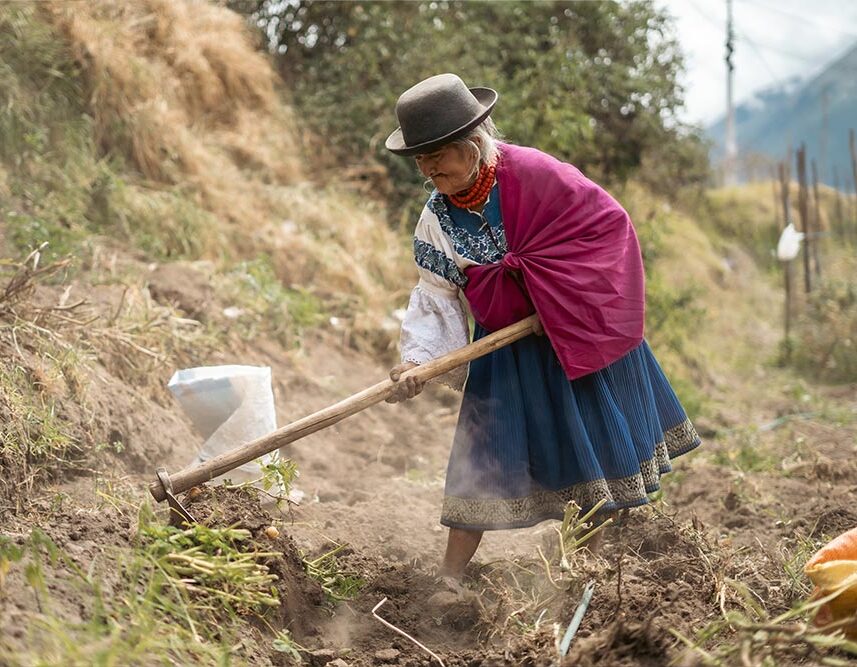
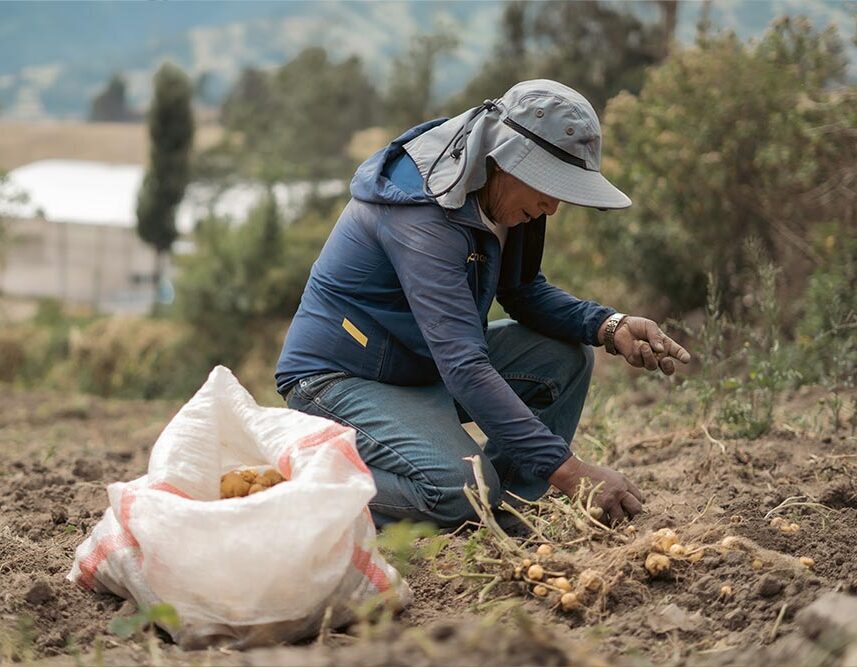
Mientras recorríamos la comunidad encontramos a un grupo de adultos mayores trabajando en un terreno destinado para ellos. Habían llegado para cosechar papas. Hombres y mujeres avanzaban entre los surcos con palas en las manos, removiendo la tierra y sacando uno a uno los tubérculos que habían crecido bajo ella.
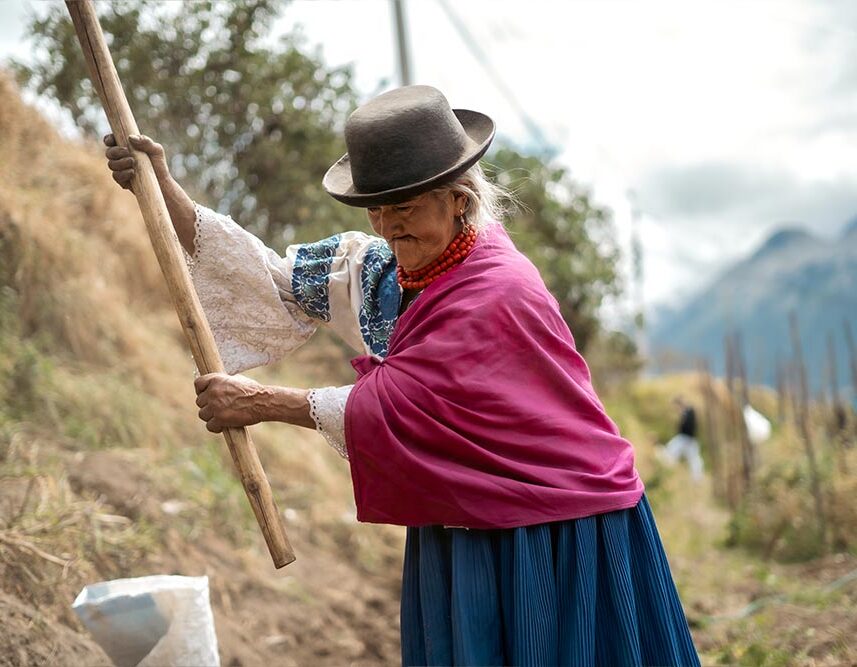
No parecía un trabajo extraordinario. Para ellos, probablemente tampoco lo era. Había algo familiar en la manera de tomar las herramientas, inclinarse sobre la tierra, conversar y continuar trabajando. Algunos llevan realizando estas labores desde su infancia y, aun con muchos años a cuestas, sus cuerpos todavía conocen los movimientos que aprendieron desde pequeños.
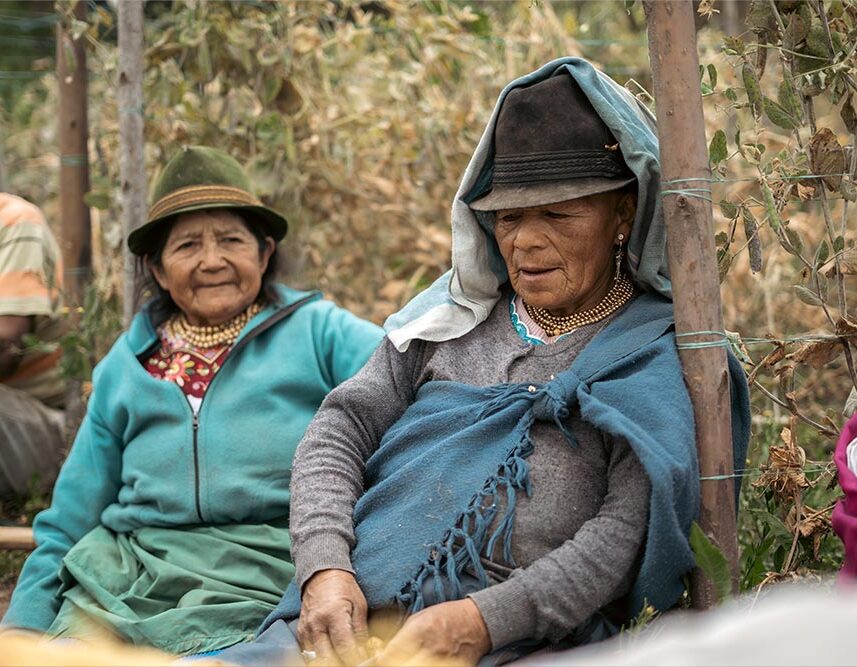
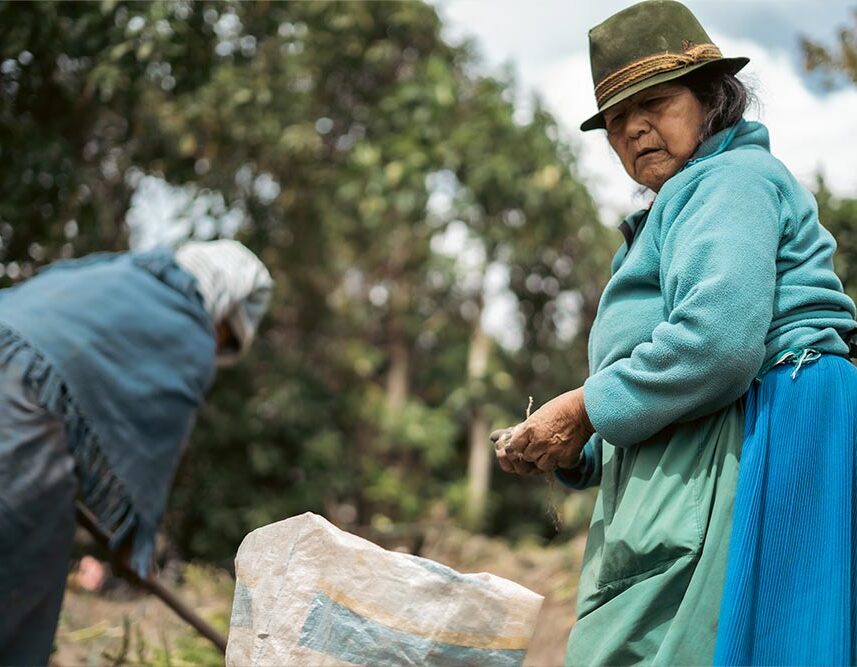
Las mujeres trabajaban con su vestimenta tradicional. Los hombres llevaban botas de caucho, sombreros, gorras, chompas o camisetas. Entre los surcos conversaban en Kichwa, una lengua que en Caluquí todavía permanece con fuerza entre buena parte de sus adultos mayores, mientras las generaciones más jóvenes la hablan cada vez menos.
Entonces la cosecha comenzó a mostrarse como algo más que una actividad agrícola.
El terreno forma parte de una iniciativa destinada a que los adultos mayores continúen vinculados a la producción y al trabajo comunitario. Allí cultivan alimentos que luego forman parte de su propia alimentación. La jornada no terminaba en el campo: mientras avanzaba la cosecha, también se organizaba el almuerzo que compartiríamos ese día.
La tierra producía las papas y, alrededor de ella, se producía también encuentro.
Había algo particularmente significativo en observar a estas personas trabajando juntas. No solamente porque conocían profundamente el oficio, sino porque en sus conversaciones, en sus gestos y en la manera de relacionarse con la tierra permanecían conocimientos que no siempre están escritos y que difícilmente pueden aprenderse fuera de la práctica.
En el contexto de una comunidad que enfrenta cambios generacionales, la agricultura también se convierte en un espacio donde permanecen formas de hablar, de alimentarse, de trabajar y de relacionarse con el territorio. Y mientras una parte de esos conocimientos comienza a alejarse de las generaciones más jóvenes, quienes todavía los conservan continúan practicándolos en su vida cotidiana.
EN:
We arrived in Caluquí to continue documenting everyday community life as part of the documentary we have been developing around water. That day, we had not expected to encounter a scene that would reveal so many different dimensions of community life at once.
As we walked through the community, we came across a group of older adults working on a plot of land designated for them. They had gathered to harvest potatoes. Men and women moved along the rows with shovels in their hands, turning the soil and pulling out, one by one, the tubers that had grown beneath it.
There was nothing extraordinary about the work. Perhaps, for them, it was not extraordinary at all. There was something deeply familiar in the way they handled their tools, bent toward the soil, talked among themselves, and continued working. Some had been doing this kind of work since childhood and, despite their age, their bodies still remembered movements learned many decades ago.
The women worked wearing their traditional clothing. The men wore rubber boots, hats, caps, jackets, or T-shirts. Between the rows, they spoke in Kichwa, a language that remains particularly present among many of Caluquí’s older residents, while younger generations are speaking it less and less.
The harvest, then, began to reveal itself as something more than an agricultural activity.
The plot is part of an initiative that allows older adults to remain connected to agricultural production and community work. The food they grow also contributes to their own diets. The day did not end in the field: as the harvest progressed, preparations were already underway for the meal we would later share together.
The land produced the potatoes, but around it, something else was being produced as well: a space for gathering.
There was something particularly meaningful about watching these people work together. Not simply because they knew the work so well, but because their conversations, gestures, and relationship with the soil carried forms of knowledge that are rarely written down and cannot easily be learned outside of practice.
Within a community experiencing generational change, agriculture also becomes a place where ways of speaking, eating, working, and relating to the land continue to exist. And while some of this knowledge is gradually becoming less present among younger generations, those who still carry it continue to practice it as part of their everyday lives.