ES:
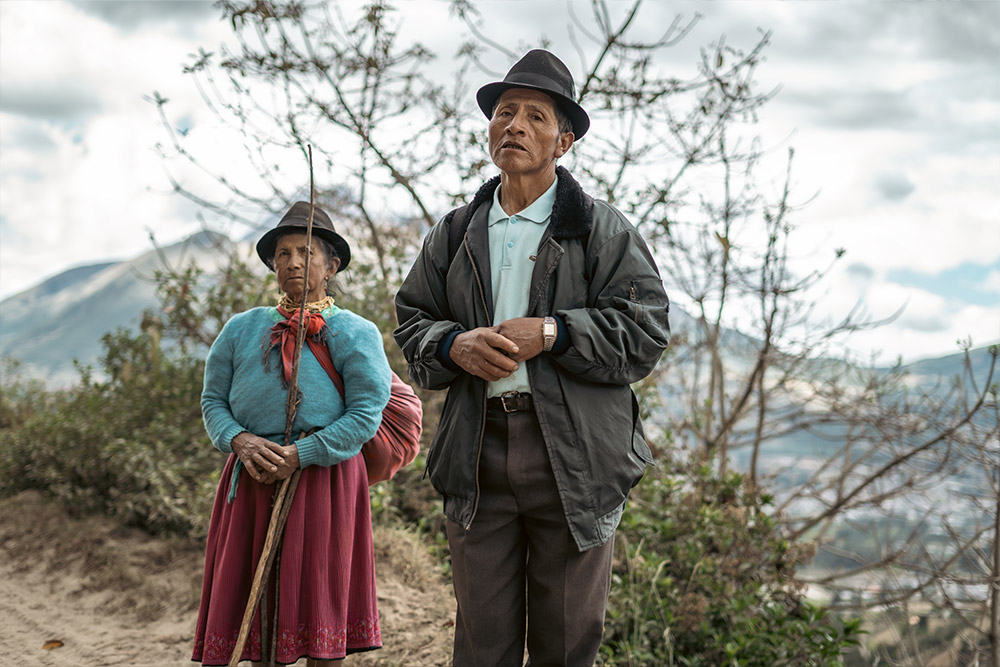
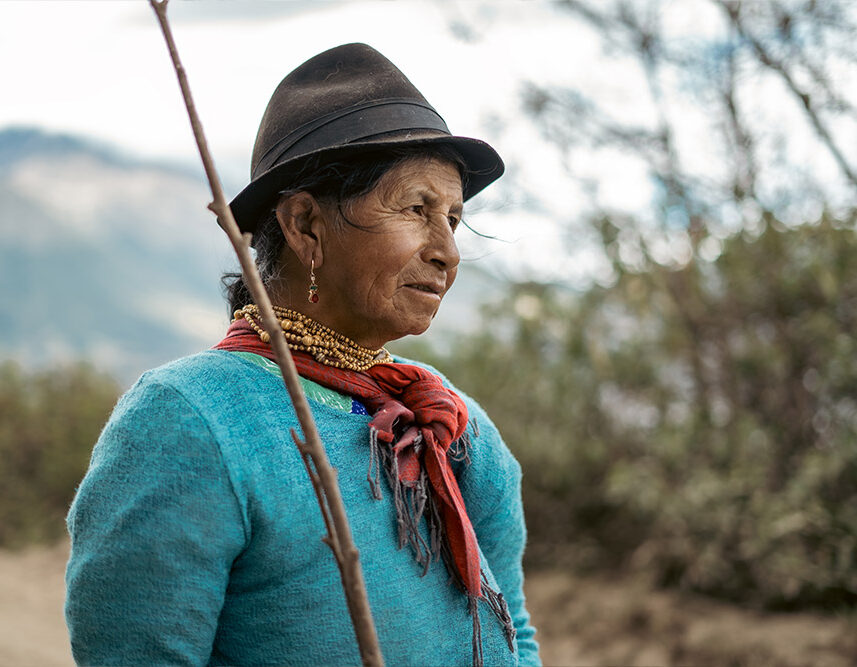
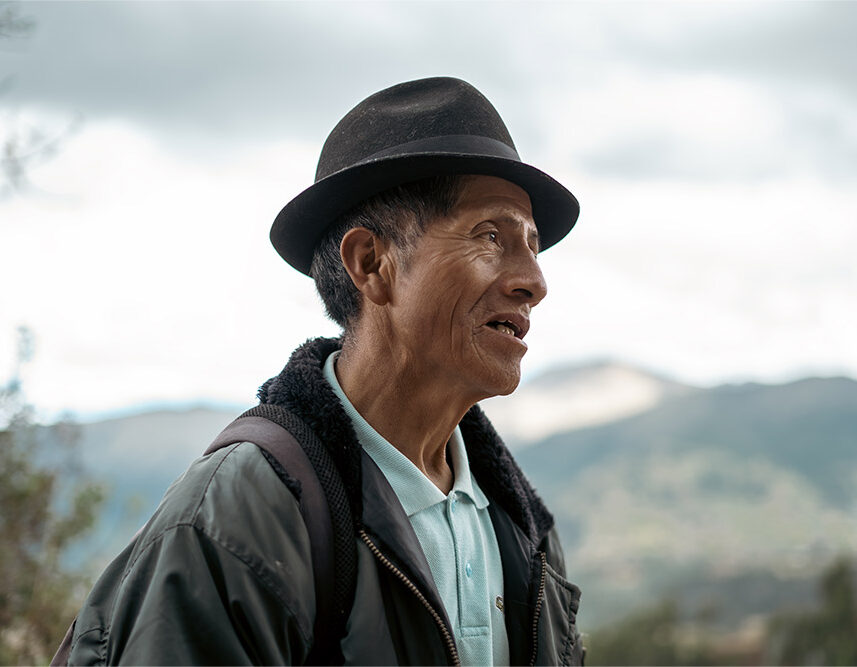
En la parte alta de Caluquí, donde la comunidad comienza a acercarse al páramo, los caminos se vuelven más empinados y las casas aparecen cada vez más distantes unas de otras. Fue allí donde encontramos a una pareja de adultos mayores que caminaba de regreso a casa.
Venían desde la entrada de la comunidad y todavía les quedaba un largo trayecto por delante. En ese momento nos encontrábamos realizando algunas tomas con dron para registrar desde el aire la extensión de la comunidad y su relación con las montañas que la rodean. Quizás fue aquella escena poco habitual la que llamó su atención y nos llevó a cruzar unas palabras.
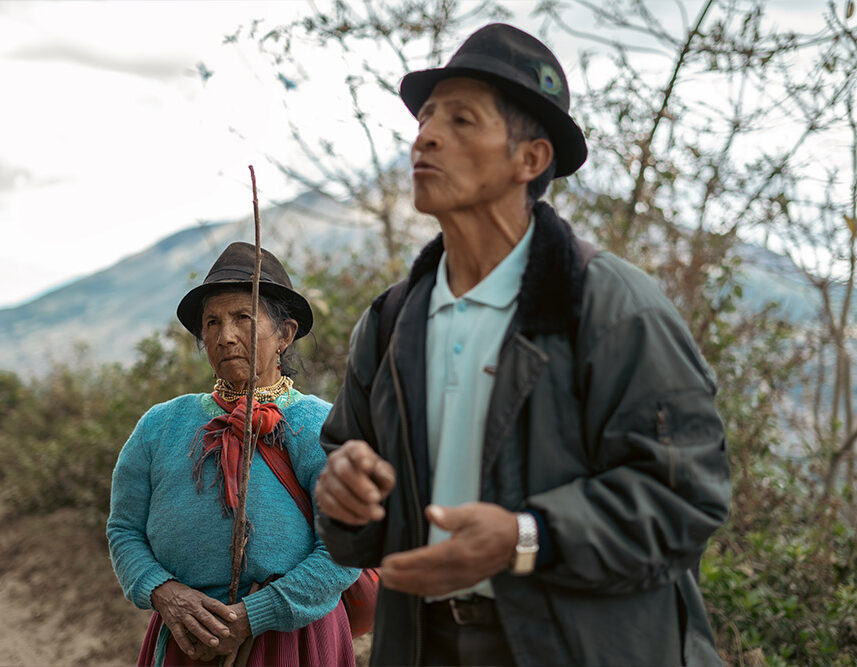
Nos detuvimos a conversar unos minutos. Les contamos que estábamos recorriendo Caluquí para documentar su vida cotidiana como parte del trabajo audiovisual que realizábamos alrededor del agua. Ellos, a su vez, nos hablaron un poco de su vida y de los años que han pasado caminando estos mismos caminos.
Durante la conversación surgió un detalle que, dentro de las comunidades, no siempre pasa desapercibido: no estaban casados. Llevaban años compartiendo su vida, pero habían elegido hacerlo fuera de esa formalidad. En un contexto donde el matrimonio continúa teniendo un peso importante dentro de las relaciones familiares y comunitarias, su historia también habla de las distintas maneras en que las personas construyen sus vínculos y sus propias formas de compañía.
Después de despedirnos, continuaron su camino.
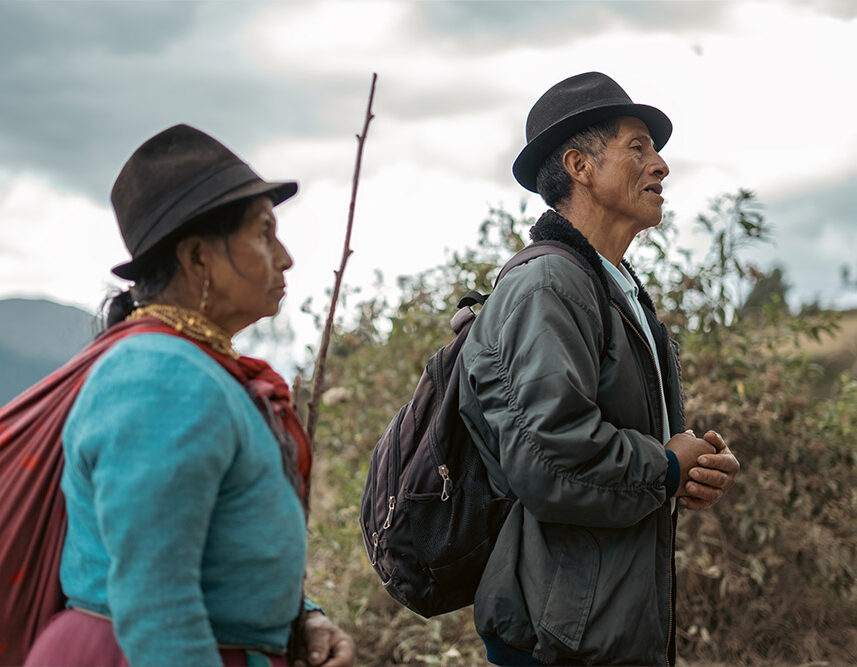
Los vimos alejarse por una vía de tierra seca, levantando polvo con cada paso. Frente a ellos se extendía el verde de las montañas y, detrás, el paisaje que asciende hacia el páramo. Caminaron hasta desaparecer lentamente detrás de una curva.
Pero antes de hacerlo, la mujer se volvió.
Quizás quería saber si todavía estábamos allí, quizás la había llamado la atención el dron que continuaba sobrevolando la comunidad. Nos miró, sonrió y levantó la mano en un último gesto de despedida. Fue un instante breve, casi imperceptible, pero suficiente para transformar una escena cotidiana en un recuerdo.
A veces, en el trabajo de campo, las historias más profundas no aparecen en las entrevistas ni en los acontecimientos que vamos buscando. Aparecen en una conversación inesperada, en una despedida o en alguien que, antes de desaparecer detrás de una curva, decide mirar una última vez hacia atrás.
EN:
In the upper part of Caluquí, where the community begins to approach the páramo, the roads become steeper and the houses increasingly scattered. It was there that we encountered an older couple walking back home.
They had been walking from the entrance of the community and still had a long way ahead of them. At the time, we were filming aerial footage with a drone to document the extent of the community and its relationship with the surrounding mountains. Perhaps it was this unusual scene that caught their attention and led us to stop and exchange a few words.
We talked for a few minutes. We told them that we were documenting everyday life in Caluquí as part of our audiovisual work around water. In return, they shared a little about their lives and the years they had spent walking these same paths.
During our conversation, one detail emerged that does not always go unnoticed in community life: they were not married. They had shared their lives for years, but had chosen to do so without formalizing their relationship through marriage. In a context where marriage continues to carry significant weight within family and community relationships, their story also reflects the different ways people build bonds and forms of companionship.
After saying goodbye, they continued on their way.
We watched them move along the dry dirt road, raising dust with every step. Ahead of them stretched the green of the mountains, while behind them the landscape climbed toward the páramo. They walked until they gradually disappeared around a bend.
But before they did, the woman turned around.
Perhaps she wanted to see if we were still there; perhaps the drone flying above the community had caught her attention. She looked back at us, smiled, and raised her hand in one final gesture of farewell. It lasted only a moment, almost imperceptible, yet it was enough to transform an ordinary scene into a lasting memory.
Sometimes, in fieldwork, the deepest stories do not appear in the interviews or in the events we set out to document. They emerge in an unexpected conversation, in a farewell, or in someone who, before disappearing around a bend, chooses to look back one last time.